Turning a product story into working proof
Databricks didn’t want a pitch. They wanted enterprise engineers to experience MLflow’s GenAI—especially Tracing—and then carry that experience back into their orgs. We built a builder-first arc that stacked credible moments (two sponsored Mega Meetups in San Francisco and a sponsored “Agents in Production” virtual) with Miami, then extended the signal through newsletters, a podcast, and search that routed intent straight to the docs.
The challenge
Practitioners are busy and skeptical. If the content isn’t useful, they bounce. If the room isn’t curated, the best questions never surface. And if momentum dies after the stage, nothing moves internally. We designed around all three.
One story, many stages
San Francisco, May 28 — Mega Meetup (Sponsored)
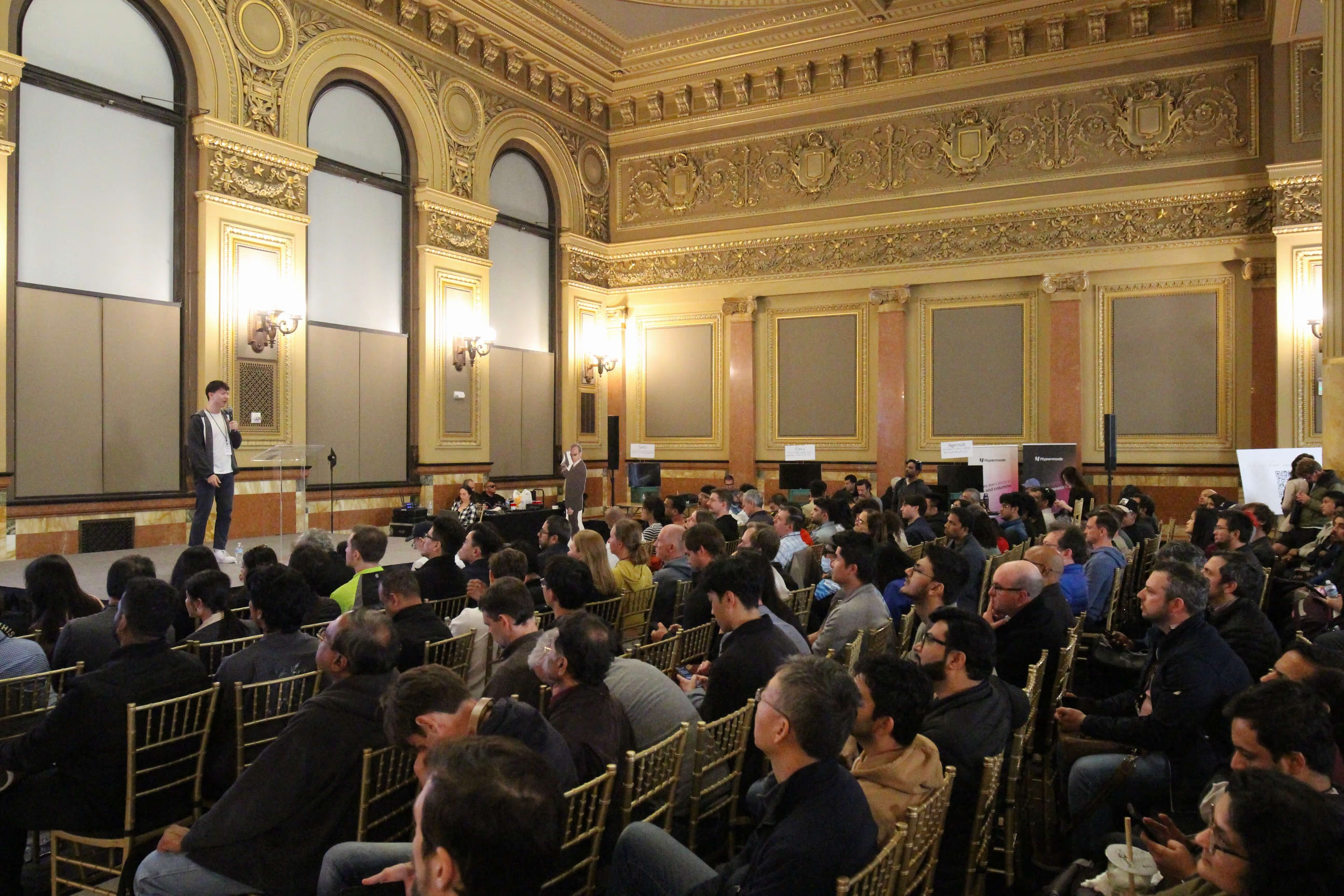
At The Hibernia, we set the tone for the series: 2,132 registered, 1,505 attendees.
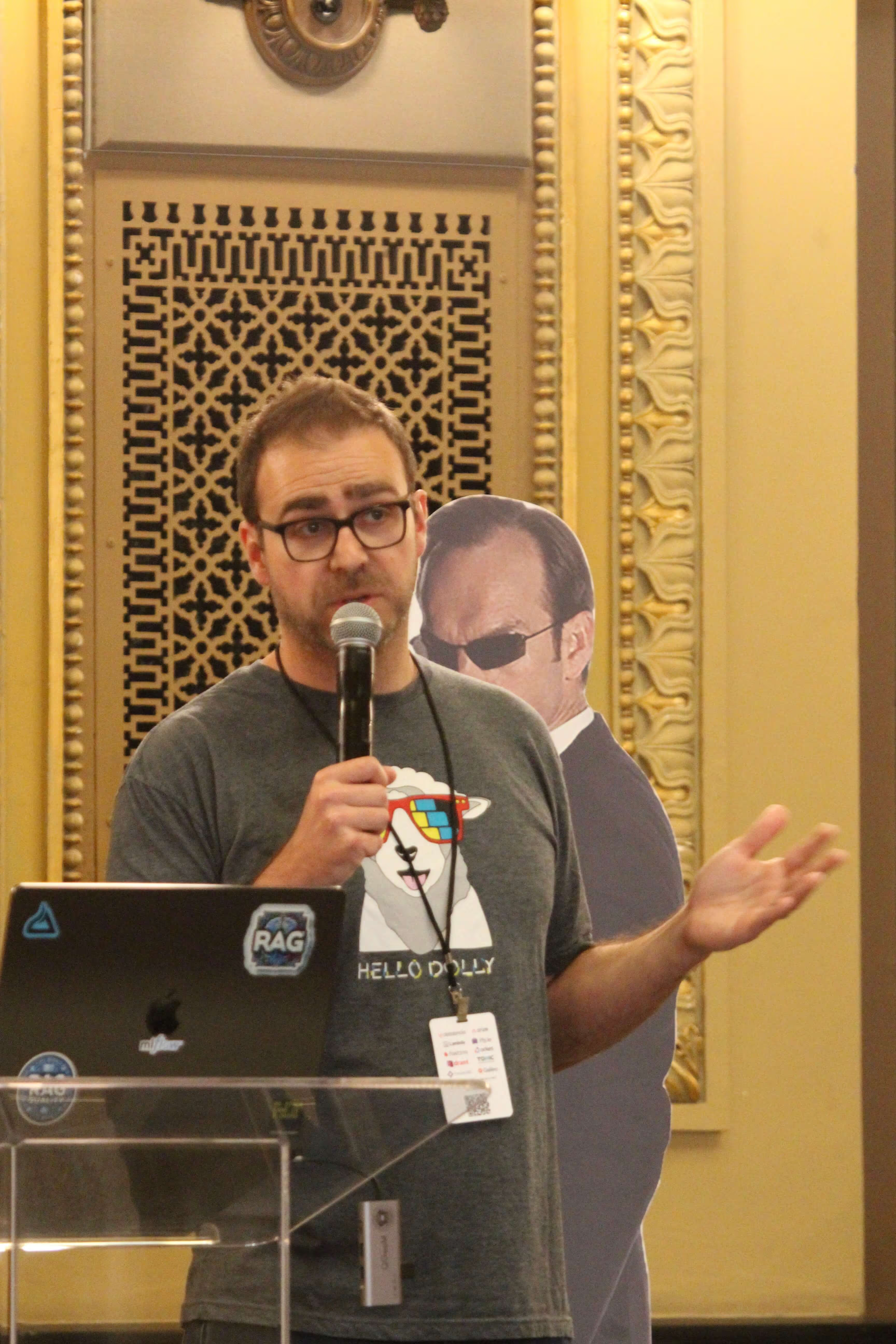
- Databricks on stage: Keynote Eric Peter (ML lifecycle → agent dev lifecycle; five platform components to build agents effectively; MLflow 3.0 highlights), Lightning Qi Zheng (FM inference speed/quality/cost trade-offs for agentic workflows).
- Onsite activation: Databricks-sponsored Boba Tea—a simple hook that kept traffic flowing to their booth and conversations moving.
Miami, June 26 — Agents World Tour (Curated)
A no-fluff, engineer-only room at The LAB Miami. Databricks shared the stage with Google and Hypermode; tight talks, frank Q&A, then deliberate hallway time for warm intros and next steps.
Global Virtual, July 17 — Agents in Production (Sponsored)
A high-signal virtual that scaled the message globally: 8,984 registered • 1,558 attendees (815 peak); livestream 1,514 (737 peak).
- Databricks talk:Yuki Watanabé, Driving Evaluation-Driven Development with MLflow 3.0—one-line observability, automatic evals, human-in-the-loop feedback, monitoring. Clear, practical steps teams could use the next day.
San Francisco, Sept 4 — Mega Meetup (Sponsored)
A West-Coast encore with 2,041 registered • 2,033 attendees.
- Databricks on stage:KeynoteCorey Zumar, LightningEric Peter — MLflow for GenAI & AgentOps with concrete patterns for quality, reliability, and speed.
Content that travels (so the story doesn’t die)
- Newsletters (MLOps Community) to prime the right audience and keep it warm: Send #1: 35,781 delivered, 10,655 opens • Send #2: 36,837 delivered, 12,045 opens. Clear, practitioner-first copy that leaders could forward internally.
- Podcast: Databricks/Mosaic AI episode with Prithviraj Ammanabrolu on Tao fine-tuning—why it works, where small models punch above their weight. We shipped a full episode plus short clips for LinkedIn and newsletter embeds so the message moved inside orgs, not just on stage.
- Launched 3 of 5 podcast pre-roll ads, with 2 pending for upcoming episodes.
- Paid search (pilot): Exact/phrase clusters around Tracing / LLM / RAG / OpenAI / LangChain → MLflow GenAI docs. Lightweight GA4/GTM events (scroll, key CTAs, doc→GitHub) gave clean readouts on what actually held attention.
What teams took home (the practical playbook)
Agent runbooks (handoffs, retries, health checks); eval-driven development in MLflow 3.0 with tracing for root-cause and cost analysis; safer MCP tool-calling; cleaner protocols and hardened RAG; and lower latency/spend via async pipelines, batching, and pragmatic GPU/inference control.
Impact
- Right rooms, real follow-ups: Sponsored SF moments plus Miami turned interest into qualified conversations.
- Durable proof: Newsletters + podcast gave Databricks assets teams replay, clip, and circulate.
- Clean demand signal: Search-to-docs showed which queries and pages earn practitioner time—and where to scale next.
What we delivered
- Mega Meetups (Sponsored): Audience curation, speaker ops, run-of-show, onsite coordination, Databricks booth traffic (incl. Boba activation), and post-event warm intros.
- Agents in Production (Sponsored): Program integration, talk placement, and narrative alignment with MLflow 3.0.
- Miami Meetup: Curated practitioner audience; peer-validated stage alongside Google/Hypermode; structured follow-ups.
- Newsletters: Copy/creative/timing to our ~30–37k practitioner list (pre-event priming, post-event reinforcement).
- Podcast: Full episode production + distribution, short-form clip strategy, titles/descriptions for internal sharing.
- Paid media (pilot): Search-first campaigns, GA4/GTM instrumentation, weekly reads, creative/audience plan.
The pattern to reuse
Keep it simple and compounding: stage → content → newsletters → docs. Sponsor the moments that matter, stand next to peers builders trust, turn those moments into assets, and route intent to where the proof lives—so each city starts further ahead than the last.